Since the American Bell AH-1 Cobra in 1967, attack helicopters have come a long way in terms of technological advancement. A tandem-seat (usually a gunner in the front, a pilot in the back), narrow-body, little to no cargo space, armored crew compartment, 20 to 30 mm cannon, shaped charge guided anti-tank missiles (ATGMs), unguided smaller diameter rockets (usually high explosive-fragmentation), and nose-mounted sensor suite are all likely to be found in a modern, dedicated attack helicopter. Short-range air defense features, such as Sidewinder missiles on the tips of the weapons’ pylons or Stinger missiles on the hardpoints in Western designs, are becoming increasingly popular as unmanned aerial vehicles become more common. Attack helicopters are expensive and require great investment, which is why they are only used by a few countries. Continue reading to learn about the most amazing attack helicopters that are still in use today.

The 10 Best Attack Helicopters That Are Still In Service
25. Harbin Z-19
The Harbin Z-19, also known as the WZ-19, is a Chinese light reconnaissance/attack helicopter built by Harbin Aircraft Manufacturing Corporation (HAMC) for the People’s Liberation Army Air Force and the Ground Force Air Force. It’s a combat version of the Harbin Z-9, which is a license-built Eurocopter Dauphin. It was originally released in 2012 and is still in use today.

25.-Harbin-Z-19
24. HAL Light Combat Helicopter
The Light Combat Helicopter (LCH) of Hindustan Aeronautics Limited (HAL) is an Indian multi-role attack helicopter designed and manufactured by HAL (HAL). The LCH has been ordered by both the Indian Air Force and the Indian Army. Its flight ceiling is the highest of any combat helicopter. A rigorous testing effort including four prototypes was carried out. During these tests, the LCH made history by becoming the first attack helicopter to land in Siachen, landing on helipads as high as 13,600 feet (4145 meters) and as low as 15,800 feet (4815 meters) on multiple occasions.

24. HAL Light Combat Helicopter
23. Sikorsky S-97 Raider
The S-97 Raider, a high-speed scout and attack compound helicopter based on the Advancing Blade Concept (ABC) with a coaxial rotor system, may still be in development, but it will be in service sooner than you think. Sikorsky wanted to sell it to the Armed Aerial Scout program of the United States Army, among other prospective customers. On May 22, 2015, the fuselage was subjected to simulated bird collisions at speeds up to 235 km (435 km/h; 270 mph), the S-97’s anticipated maximum flight speed. Drop tests were also performed to ensure that the gasoline tanks would not be damaged in the event of a collision.

23. Sikorsky S-97 Raider
22. Aérospatiale Gazelle
The Aérospatiale Gazelle is a five-seat French helicopter used for light transport, reconnaissance, and light attack operations. It is powered by a single Turbomeca Astazou turbine engine and was the first helicopter to use a fenestron tail rotor instead of a conventional tail rotor. It was designed by Sud Aviation, which later became Aérospatiale, and manufactured in France and the United Kingdom. The Gazelle can transport up to five passengers and 1,320 pounds of freight on the cargo hook beneath it. Armed variants would include up to four wire-guided anti-tank missiles or a forward-firing 20mm cannon mounted on the fuselage sides, with ammunition kept in the cabin.

22. Aérospatiale Gazelle
21. Eurocopter AS-565 Panther
The AS565 Panther is a military version of the Eurocopter AS365 Dauphin medium-weight multipurpose twin-engine helicopter. The Panther’s military missions include combat assault, fire support, anti-submarine warfare, anti-surface warfare, search and rescue, and medical evacuation. Although it is manufactured in the United States, it is mostly used by the French Navy, Brazilian Army, Israeli Air Force, and Indonesian Navy. The Panther has a top speed of 288 km/h, a ceiling speed of 2,415 km/h, and a range of 472 kilometers.

21. Eurocopter AS-565 Panther
20. Kamov Ka-60
The military version of this helicopter, the Ka-60, was first introduced in 1998, but it has since been stuck in development hell. The first prototype got to the air in 2007, after development began in 1984. Since then, things haven’t progressed at a faster rate. Over the next decade, more testing was conducted to resolve concerns with the engine and other challenges, and the model as it is now flown for the first time in 2017. The Ka-60 has a crew of one or two, is 51 feet 2 inches long, and has a top speed of 191 miles per hour.

11. Kamov Ka-60
19. Black Hawk Utility Helicopter UH/HH-60
A single Black Hawk helicopter can transport up to 11 soldiers and crewmen at a speed of 182 miles per hour, outperforming most other helicopters. Twin GE-700 engines drive the Black Hawk to those speeds. It weighs 20,250 pounds gross and can carry an external load of 8,000 pounds and an internal load of 2,640 pounds. It has a crew of two pilots and two crew chiefs and is armed with two 7.62 mm machine guns. You may recognize this chopper from its role in the Academy Award-winning film Black Hawk Down in 2001.

19. Black Hawk Utility Helicopter UH/HH-60
18. Bell UH-1 Iroquois
From the Falklands War between the United Kingdom and Argentina to Japan sending Hueys to Pakistan for disaster assistance and employing two Hueys for coastal surveillance after the Fukushima Nuclear Disaster in 2011, the Huey has been employed by troops all over the world. Hueys could carry a gross weight of 9,040 pounds, had a cruising speed of 125 miles per hour and a top speed of 135 miles per hour, had a range of 315 miles and were armed with 7.62 mm machine guns and 2.75 in. Pods for rockets

18. Bell UH-1 Iroquois
17. Bell AH-1 SuperCobra
As an enhanced variant of Bell’s iconic Cobra, this assault helicopter was developed near the end of the Vietnam War. SuperCobras have a two-person crew, measure 45 ft x 9 in. x 10 ft 9 in., have a maximum takeoff weight of 10,000 lbs, can reach 175 mph, and can be armed with 20 mm M197 3-barreled Gatling cannons, 2.75 in. rockets, 5 in. Zuni rockets, and AIM-9 Sidewinder anti-aircraft missiles, among other armaments.

17. Bell AH-1 SuperCobra
16. Bell AH-1Z Viper
The Viper is the newest addition to Bell’s long line of attack helicopters, and it’s designed to replace the SuperCobra. In 2010, the US Marine Corps approved full production and declared it combat-ready. In 2015, the United States approved the sale of Vipers to Pakistan. Poland’s Armed Forces, the Czech Republic’s Armed Forces, Romania’s Armed Forces, Morocco’s Armed Forces, and Bahrain’s Armed Forces have all purchased or expressed interest in purchasing Vipers. The Vipers have a two-person crew, are 58 feet 3 inches long, have a maximum takeoff weight of 18,500 pounds, a cruising speed of 180 miles per hour, a combat range of 125 miles, and can be armed with a single 20 mm M197 three-barreled rotary cannon, 2.75-inch rockets, and AIM-9 Sidewinder and AGM-114 Hellfire air-to-surface missiles, among other weapons.

16. Bell AH-1Z Viper
15. Mil Mi-24 Hind
Although the Mi-24 was built as an assault helicopter, it resembles a UH-1 Huey gunship in appearance. It can transport troops while also delivering a punch, yet it is unlike anything the Western Armies have ever flown. The Mi-24, on the other hand, deserves to be included because of its multi-role support capabilities, which have helped it become a global favorite. The Mi-24 is used by the Russian Air Force and 58 other countries. To date, over 2,600 planes have been manufactured.

15. Mil Mi-24 Hind
14. CAIC WZ-10 Fierce Thunderbolt
The WZ-10 had its first flight in 2003 and is still in service today. It has a plethora of cutting-edge technologies, including a mind-blowing electronic warfare system. Anti-tank warfare is the primary mission of the WZ-10, as it is for many attack helicopters, although it is also capable of air-to-air combat. There are several notable variations of the CAIC.

14. CAIC WZ-10 Fierce Thunderbolt
14)i. CAIC Z-10K
This helicopter is a stripped-down version of the Z-10H, powered by a 930–950 kW Chinese WZ-9 engine. The People’s Liberation Army Air Force Airborne Corps requested that the Z-10K be modified from the baseline Z-10. The MASWS, IRCM, add-on armor plates, and a few other subsystems were deleted to save weight and improve range and airborne performance.

14)i. CAIC Z-10K
14)ii. CAIC Z-10ME
Active and passive countermeasures, a missile approach warning system, a radar warning receiver, and a redesigned engine exhaust nozzle are all included in this improved model (pointed upwards to reduce infrared signature). New intake filtering systems and armor panels, as well as a more powerful 1200 kW engine, a larger ammunition magazine, appliqué graphene-based armor panels, an infrared jammer, and a new IFF interrogator, are all included. It was initially introduced in 2018 and is still in use today.

14)ii. CAIC Z-10ME
13. Kamov Ka-50
The Russian Ka-50 is 52 feet 6 inches long, has a maximum takeoff weight of 23,810 pounds, has two Klimov VK-2500 turboshaft engines that can achieve 196 mph, and can be armed with one transportable semi-rigid 30 mm Shipunov 2A42 cannon, S-8, and S-13 rockets, and a variety of missiles and bombs.

13. Kamov Ka-50
12. Mil Mi-28
The state has awarded this assault helicopter a long-term contract that will keep it in production until 2027. The Mi-28 is 55 feet 10 inches long, with two Klimov TV3-117 turboshaft engines and a 30 mm Shipunov 2A42 cannon on the chin, Ataka-V anti-tank missiles, and S-8 and S-10 missiles.

12. Mil Mi-28
11. Boeing AH-64D Apache
The Apache is widely regarded as one of history’s most successful assault helicopters. The Apache AH-64D has seen a lot of action over the last three decades, from attacks on Iraq’s radar system during the Gulf War to later operations in Iraq and Afghanistan to NATO intervention in Bosnia and Herzegovina. It’s a twin-engine assault helicopter equipped with armor-piercing armaments such as an M230 30-mm cannon, Hydra-70 2.75-inch rockets, and laser-guided Hellfire missiles capable of firing 600 to 650 rounds per minute. It has a combat speed of 166 mph, a top speed of 188 mph, a range of 260 mph, and a gross weight of 26,260 pounds. The Apache comes in a variety of flavors.

20. Boeing AH-64 Apache
11) i. Apache AH-64A Variant
The AH-64A assault helicopter was the first to start production. The crew sits side by side in an armored compartment. The ship is powered by two GE T700 turboshaft engines. The 701 engine was utilized in the A-model until 1990 when it was replaced by the 701C version, which was more powerful. On September 25, 2012, Boeing was awarded a $136.8 million contract to remanufacture the last 16 AH-64As into the AH-64D Block II version.

11) i. Apache AH-64A Variant
11) ii. Apache AH-64C Variant
Late in 1991, Congress approved more funding for a program to upgrade AH-64As to AH-64B+ models. Due to the additional funds, the plan to upgrade to the AH-64C was changed. The C upgrade would include all upgrades made to the Longbow, except mast-mounted radar and newer 700C engine versions. The C classification, on the other hand, was no longer used after 1993. After AH-64As received the updated engine in 1990, the only difference between the C model and the radar-equipped D model was the radar, which could be changed from one aircraft to another. As a result, the decision was made to call both types “AH-64D” in the end.

11) ii. Apache AH-64C Variant
10. Denel Rooivalk
The South African Rooivalk is based on the Aérospatiale SA 330 Puma. As a result, French technology and components are significantly used in the design. Despite its lofty ambition of creating one of the best attack helicopters in the world, Denel Aviation was able to build an aircraft that is on par with its competition. The Rooivalk, which is armed with very advanced indigenous Mokopa ATGMs, outclasses anything South Africa may face in its geopolitical region. With only 12 instances generated and financial constraints hanging over operational readiness, the Rooivalk is a far-reaching concept, but Denel’s technological reach greatly outstrips its grasp.

10. Denel Rooivalk
9. CAIC Z-10
The Chinese Z-10 was created with the help of the Russian Kamov design bureau, resulting in a lighter vehicle than its competitors. It is the first indigenous assault helicopter in the country. It is a novel design that was debuted in 2012 and already meets the numerical requirements of the Chinese military forces. The Z-10 has not yet been put through its paces. So far, about 300 have been produced for the People’s Liberation Army.

9. CAIC Z-10
8. Mil Mi-24 Hind
The aged design has been a repeating aerial vision of Asian and African conflicts for the past 40 years. It’s a flexible platform that’s used by a variety of states and paramilitary groups. The Mi-24 is the assault rifle equivalent of the AKM. A Cold War-era classic that has stood the test of time. Because it is a dual attack/transport helicopter, it is substantially larger than subsequent models. Despite being heavily armed and armored and being less nimble by today’s standards, it is nonetheless relevant today.

8. Mil Mi-24 Hind
7. Agusta A129 Mangusta
The Italian A129 assault helicopter is Western Europe’s first of its sort. After the Cold War ended, the Italian design, which was the lightest among its global competitors, was revised. The aircraft were streamlined and ballistic protection was lowered since NATO no longer expected to face a Soviet armor attack. At the time, it was regarded to be comparable to the American AH-64 Apache. The A129 is armed with NATO-standard weaponry like Hellfire and TOW ATGMs. A total of sixty units were made, with more than 30 still in operation today.

7. Agusta A129 Mangusta
6. TAI T129 ATAK
The T129 is a Turkish modernization of the Agusta A129 Mangusta, sharing only the fuselage. Turkish technology is utilized inside, with upgraded avionics, airframes, and weaponry. There are currently 60 units in service, with the ability to create 32 more if necessary. The T129 appears to be a more successful global version of its Italian predecessor, with countries such as Qatar, the Philippines, and Pakistan showing interest. This helicopter was so popular that two more versions are still in use today.

6. TAI T129 ATAK
The five highest-ranking attack helicopters still in use today are next. These helicopters are massive, and they certainly elevate the user nation above the rest. So, which assault helicopters were chosen in the end?
6) i. TAI T129A EDH
The T129A is a “combat support” version with a 20 mm Gatling gun, ammo, and the capacity to carry 70 mm (2.75 in) rockets; nine T129As have been ordered. Six helicopters have been supplied to the Turkish Army. The T129As will be converted to the T129B standard.

6) i. TAI T129A EDH
6) ii. TAI T129B
The T129B is an electronic warfare-capable “multi-role” aircraft. There were 51 helicopters manufactured in total, one of which was used as a weapons testbed. The T129B has a 20 mm Gatling gun and can transport up to eight UMTAS ATGMs, sixteen Cirit missiles, eight air-launched Stinger missiles, and 76 70 mm (2.75 in) unguided rockets.

6) ii. TAI T129B
5. Eurocopter Tiger
The Tiger, built jointly by France and Germany, is the second and most advanced attack helicopter to emerge from Western Europe. With over 180 units sold, it is the most popular and successful European design. The airframe is made up of 80% carbon laminates, Kevlar, and honeycomb-shaped components and is created using a composite design. The Tiger is outfitted with a variety of Western missiles, rockets, and a French cannon and is employed by German, French, Spanish, and Australian forces.

5. Eurocopter Tiger
There are several variants of the Tiger; a different ones for each Germany, France, and Australia.
5) i. Germany: UH Tiger
The Bundeswehr’s UHT (Unterstützungshubschrauber Tiger) is a medium-weight multi-role fire support helicopter (German Armed Forces). The UHT can carry PARS 3 LR “fire and forget” and/or HOT3 anti-tank missiles, as well as Hydra 70 air-to-ground fire support rockets from Forges de Zeebrugge. Four AIM-92 Stinger missiles (two on each side) are mounted for air-to-air warfare. It does not have an integrated gun turret like the HAP/HCP model, although it may be fitted with a 12.7 mm (0.50 in) gun pod if necessary. The armament was designed to be multirole and quickly reconfigurable, allowing it to cover a wide range of mission scenarios while also being effective against a variety of targets.

Germany UH Tiger
5) ii. France: Tiger HAP
The Tiger HAP/HCP (Hélicoptère d’Appui Protection) is a medium-weight air-to-air combat and fire support helicopter designed by the French Army. It has a GIAT 30 mm gun turret on the chin and can launch 68 mm SNEB unguided rockets, 20 mm machine guns, and Mistral air-to-air missiles for fire support. France had delivered 40 HAP by 2012, for €27 million (US$36 million) per unit in 2012 prices. In December 2015, France decided to upgrade its entire Tiger fleet to the HAD standard by 2025.

France Tiger HAP
5) iii. Australia: Tiger ARH
The Tiger ARH (Armed Reconnaissance Helicopter) was ordered by the Australian Army to replace its OH-58 Kiowas and UH-1 Iroquois-based ‘Bushranger’ gunships. The Tiger ARH is an updated Tiger HAP with upgraded MTR390 engines and a laser designator integrated into the Strix sight for Hellfire II air-to-ground missile shooting. Instead of SNEB unguided rockets, the ARH uses Forges de Zeebrugge 70 mm (2.75 in) rockets from Belgium (FZ). 22 of the versions were ordered in December 2001.
France Tiger HAP
4. Bell AH-1Z Viper
The American Viper is a third-generation descendant of the legendary Bell AH-1 Cobra, the ancestor of all modern attack helicopters. The US Marine Corps was the first to use the asset in 1965. The latest model in the class-defining design, the Viper, has proven to be a capable and long-lasting platform. The Marines intend to deploy 189 Vipers, which were first deployed in 2010. The platform is still going strong after 55 years, with new orders coming in from Bahrain and the Czech Republic.

4. Bell AH-1Z Viper
3. Mil Mi-28NM Havoc
The latest assault helicopter from Russia joins the renowned Mi-24 and the one-of-a-kind Ka-50 families. After a 27-year development period from first flight to debut, the Havoc has finally evolved into an all-around efficient design. It is known for its armor, which includes windshields that can withstand bullets with a diameter of 14.5114mm. The Havoc made a successful combat debut during the battle of Palmyra in Syria. Since 2020, it has served with Russia, Iraq, and Algeria, with more orders on the way.

3. Mil Mi-28NM Havoc
3) i. Mi-28NE
This is the export version of the Mi-28N, which is now in service with the Iraqi and Algerian air forces. In August 2018, Russian Helicopters revealed an improved Mi-28NE variant with modifications to the main rotor system and engine unit, as well as more on-board radio-electronic equipment. The helicopter also has enhanced armor and modern directional IR countermeasures (DIRCM) against short-range IR-guided missiles. The fuel system is fire and explosion-resistant, and the composite rotor blades can withstand shells up to 20–30 mm in diameter. It will also be capable of firing the Khrizantema-V anti-tank guided missiles (9M123) (ATGMs).

Mi-28NE
3) ii. Mi-28NM
In 2009, a new version of the Mi-28N was released. Due to the removal of the nose antenna, a new H025 radar station for all-around visibility, more powerful VK-2500P engines with FADEC instead of the previous Klimov TV3-117VMA engines, and improved rotor blades, the helicopter’s nose hull has been redesigned, resulting in a 13 percent increase in maximum speed and a 10% increase in cruise speed. Aside from that, it boasts a new onboard radio-electronic data processing system called “Izdeliye 296” as well as an improved fire-control system. It can be equipped with anti-tank missiles 9M123 Khrizantema-V and 9M127-1 Ataka-VM.
Mi-28NE
3) iii. Mi-40
Mil Mi-40 was a potential utility variant of the Mi-28 that was first suggested in 1983, announced in 1992, and flown for the first time at the Moscow Airshow in 1993. In the “Aerial Infantry Fighting Vehicle” category, it was planned to replace the Mil Mi-24 and Mi-8 assault helicopters. It has two Klimov TV3-117 turboshaft engines producing 1,863 kW each, a four-blade main rotor and four-blade Delta H tail rotor (both Mi-28), and retractable tricycle-type landing gear. It has a 3300 m ceiling, a maximum speed of 314 km/h, and a cruise speed of 260 km/h, and weighs roughly 11–12,000 kg.

Mi-40
2. Kamov Ka-52 Hokum-B
With tandem side-by-side seating, ejection seats, two contra-rotating main rotors, and no tail blades, the Ka-52 assault helicopter is undoubtedly the most unconventional attack helicopter in service today. It’s currently one of the world’s most maneuverable helicopters. Thanks to its superior battlefield management system, the Ka-52 may serve as a target detector and designator for a larger helicopter group of Mi-24s and Mi-28s. Even though its autocannon is fixed and lacks the flexibility of a turret, the Ka-52 boasts all of the weaponry expected of a modern attack helicopter.

2. Kamov Ka-52 Hokum-B
2. i) Kamov Ka-50
The Kamov Ka-50, sometimes known as the “Black Shark,” is a Russian single-seat assault helicopter with Kamov’s trademark coaxial rotor technology. It was created in the 1980s and first used by the Russian army in 1995. It is made by the Progress company in Arsenyev. It’s used as a heavy-weapons-carrying scout helicopter. It was the world’s first operational helicopter with a rescue ejection system, and it was regarded as such until it was surpassed by its successor, the Kamov Ka-52.

Kamov Ka-50
2. ii) Kamov Ka-50Sh
The Ka-50SH differs from its predecessor in appearance, which perekomponovana under the co-location of laser-television day and night sighting channels thermal-flight – navigational complex “Rubicon-N.” The daily feed from the fuselage’s bow shifted into the newly constructed fairing, which is slightly expanded forward. The helicopter’s movable ball has a diameter of 640 mm, making it suitable for night strikes.

2. ii) Kamov Ka-50Sh
2. iii) Kamov Ka-52 Alligator
The Ka-52 Alligator is an all-weather assault helicopter used by the Russian Air Force. The Ka-52 is a twin-seat variant of the Kamov Design Bureau’s Ka-50 attack helicopter (part of Russian Helicopters). It is a substantially improved version with a two-seat side-by-side cockpit for the Russian Air Force.
2. ii) Kamov Ka-50Sh
Up next we have the highest ranking attack helicopter still in active use today…
1. AH-64E Apache Guardian
The Apache is the most popular and widely utilized assault helicopter in the Western world and its allies. It is the workhorse of the United States Army. By 2020, the US and its allies, including Israel, the United Kingdom, Japan, South Korea, and others, will have built almost 2400 ships. Since its introduction, the Apache has served in every major American and NATO engagement, making it the most experienced and proven Western warfighter in its class. The Apache is a very reliable and successful vehicle that will be around until at least 2048. Hellfire missiles, M320 chain gun with 1200 rounds of 30 mm ammo, and Hydra rockets – the Apache is a very reliable and successful vehicle that will be around until at least 2048.

1. AH-64E Apache Guardian
Now that we’ve discovered the best attack helicopter still in active use, Keep reading to see the top 10 aircraft that we couldn’t include in the list.
These aircraft are debatably superior to attack helicopters, as they can travel at higher speeds and have more range, although they are not without controversy. The Soviet Union (number one) is simply too powerful!
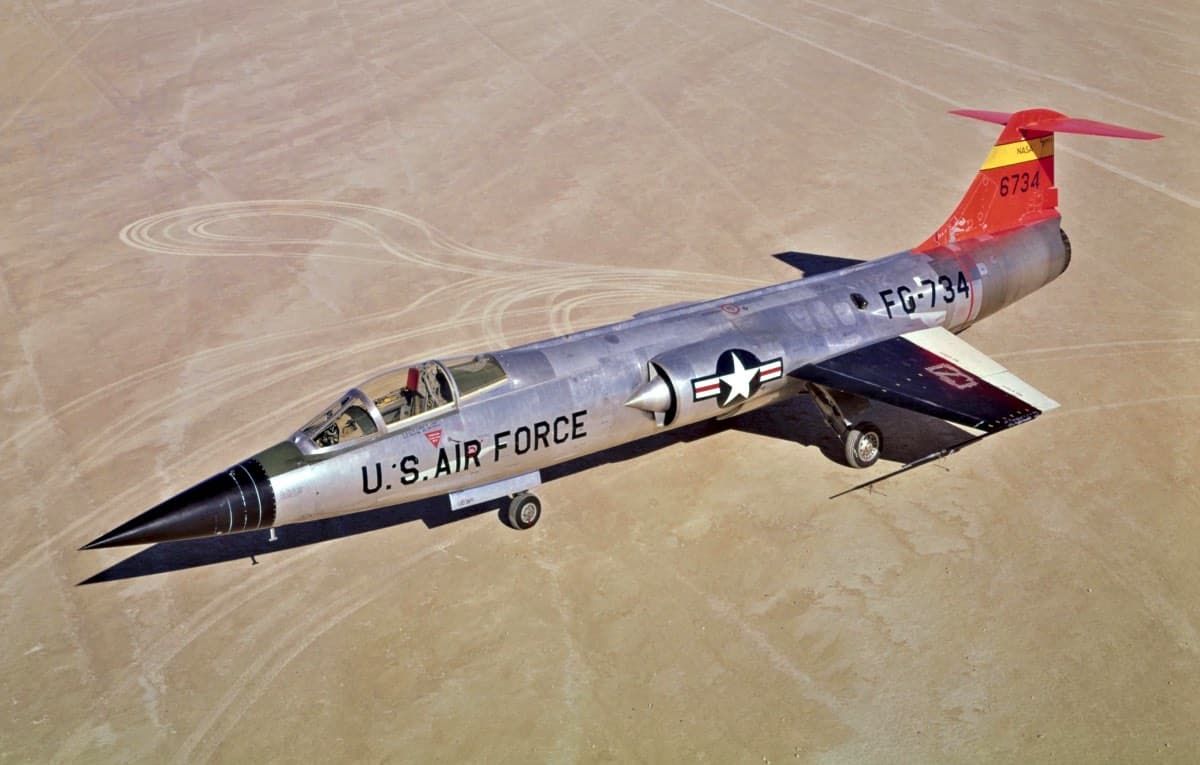
10. Lockheed F-104 Starfighter – U.S.A.
In the late 1950s, the Lockheed F-104 Starfighter was introduced to the world. It was used by a variety of military groups all across the world until the turn of the century. Italy, Turkey, Spain, Germany, and the United States have all used this aircraft in the past. Even though it has been discontinued, this model is still available for private purchase. Kelly Johnson, a well-known aeronautical engineer, assisted in the creation of the Starfighter. He also worked on the SR-71 Blackbird and the U-2 spy plane’s development. It was lethal and provoked a lot of debate while it was still in service.
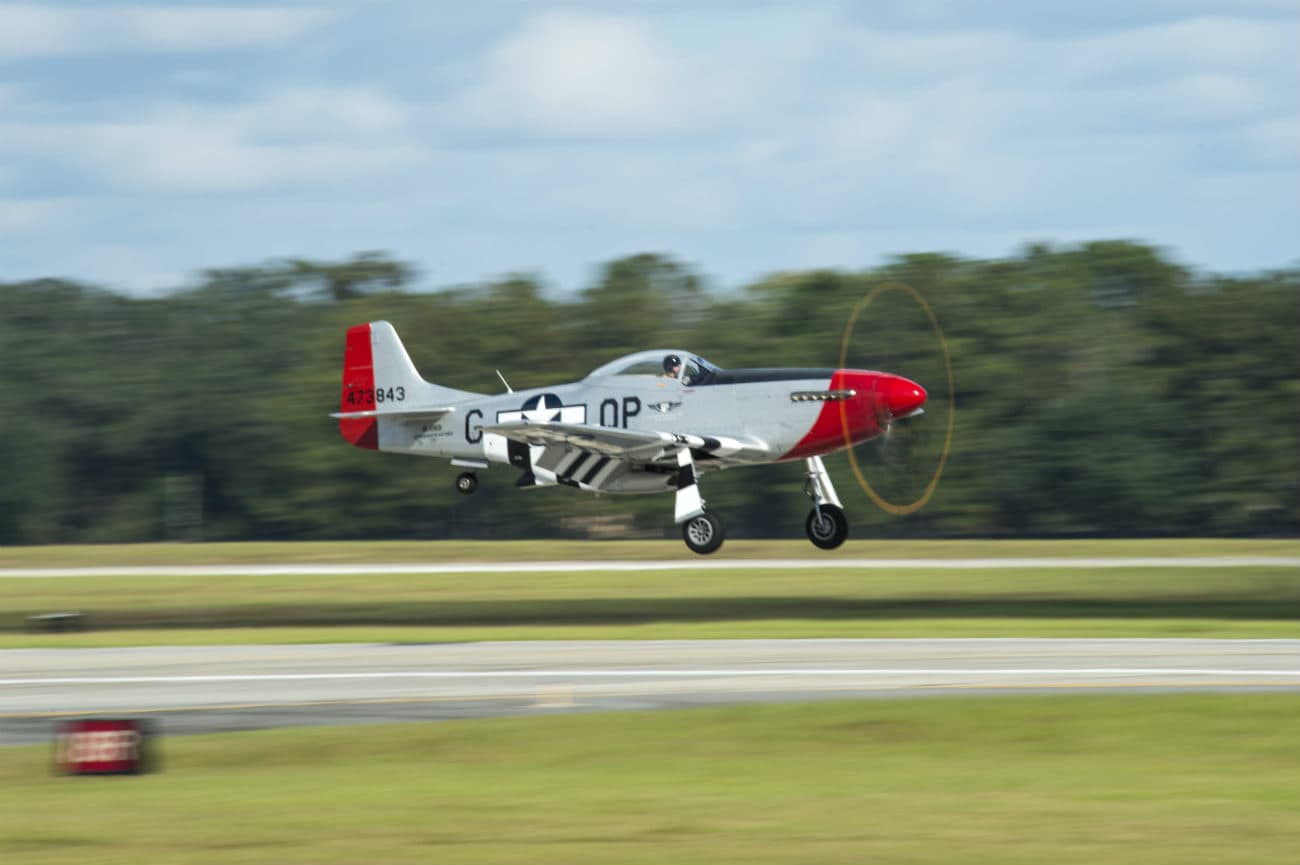
9. P-51 Mustang – U.S.A.
The P-51 Mustang is considered a classic in North America. It was intended for the British as a medium-altitude fighter plane during WWII. On the other hand, it surpasses all expectations. It was able to reach higher heights and generate more power after the Rolls Royce Merlin and then the Packard V-1650-7 engines were fitted. This aircraft played a crucial role in reconnaissance missions and accompanied a large number of bombers throughout numerous engagements because of its long-range capability. The top speed of the P-51 Mustang is 430 mph.
8. Supermarine Spitfire – United Kingdom
Did you know that during WWII, the Supermarine Spitfire was the most popular British plane? It was also the only one that was manufactured regularly throughout the fight. There were several variants, each with its distinctive wing design. On the other hand, the 50 Supermarine Spitfire is still flying today.

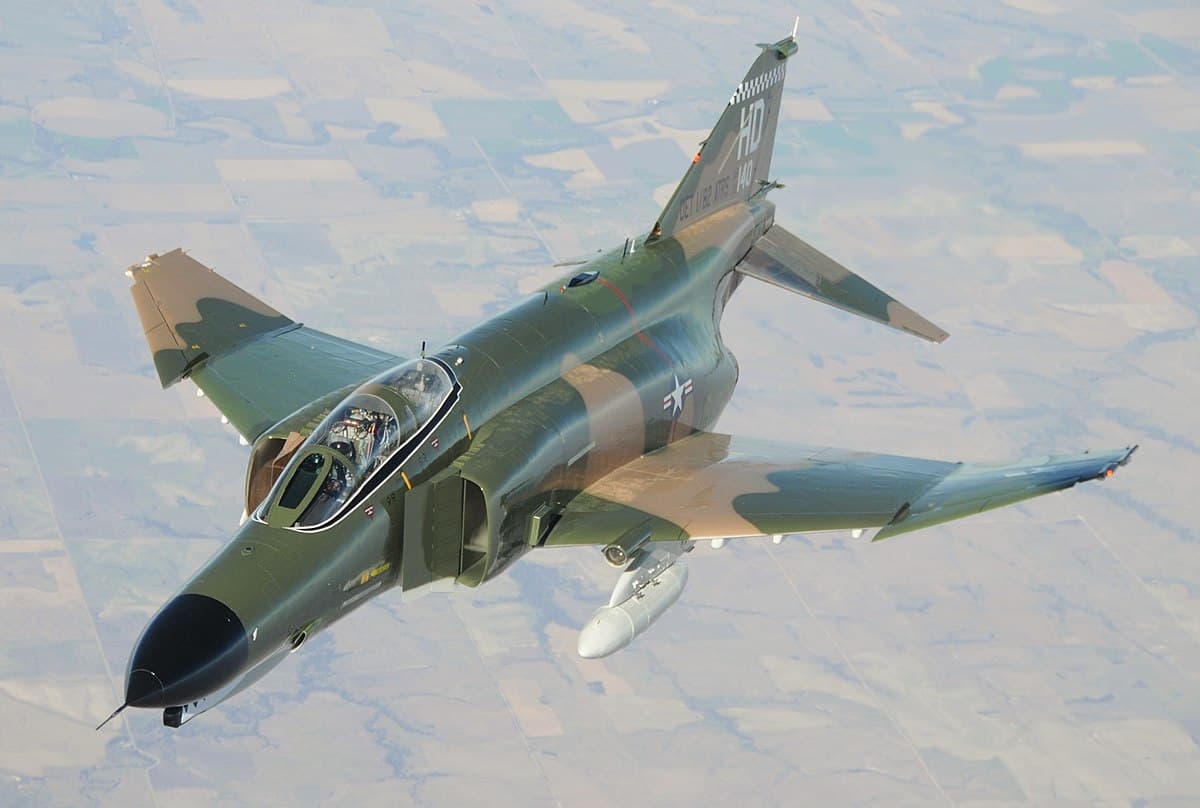
7. F-4 Phantom II – United Kingdom
Did you know that during WWII, the Supermarine Spitfire was Britain’s most popular aircraft? During the contest, it was also the only one that was consistently produced. There were several versions, each with its distinctive wing design. On the other side, the Supermarine Spitfire 50 is still flying today.
7. Curtiss P-40 Warhawk – U.S.A.
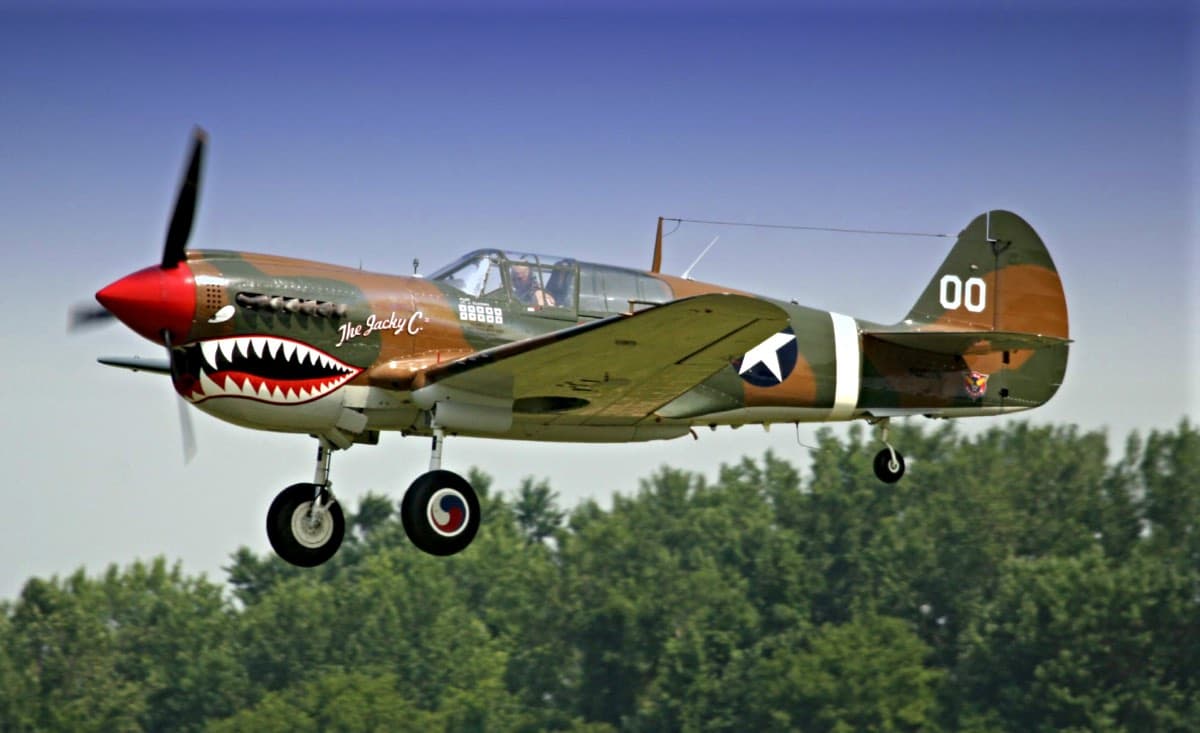
The Curtis P-40 Warhawk was a prominent player in the skies during WWII. It was one of the three most widely deployed US fighters during the conflict. As a result of performance issues and difficulties, it has undergone various updates over the years. Despite this, it isn’t a “top fighter,” but it does have a fantastic appearance. It’s one of the reasons why aviation enthusiasts from all over the world flock to it.
6. B-29 Superfortress – U.S.A.
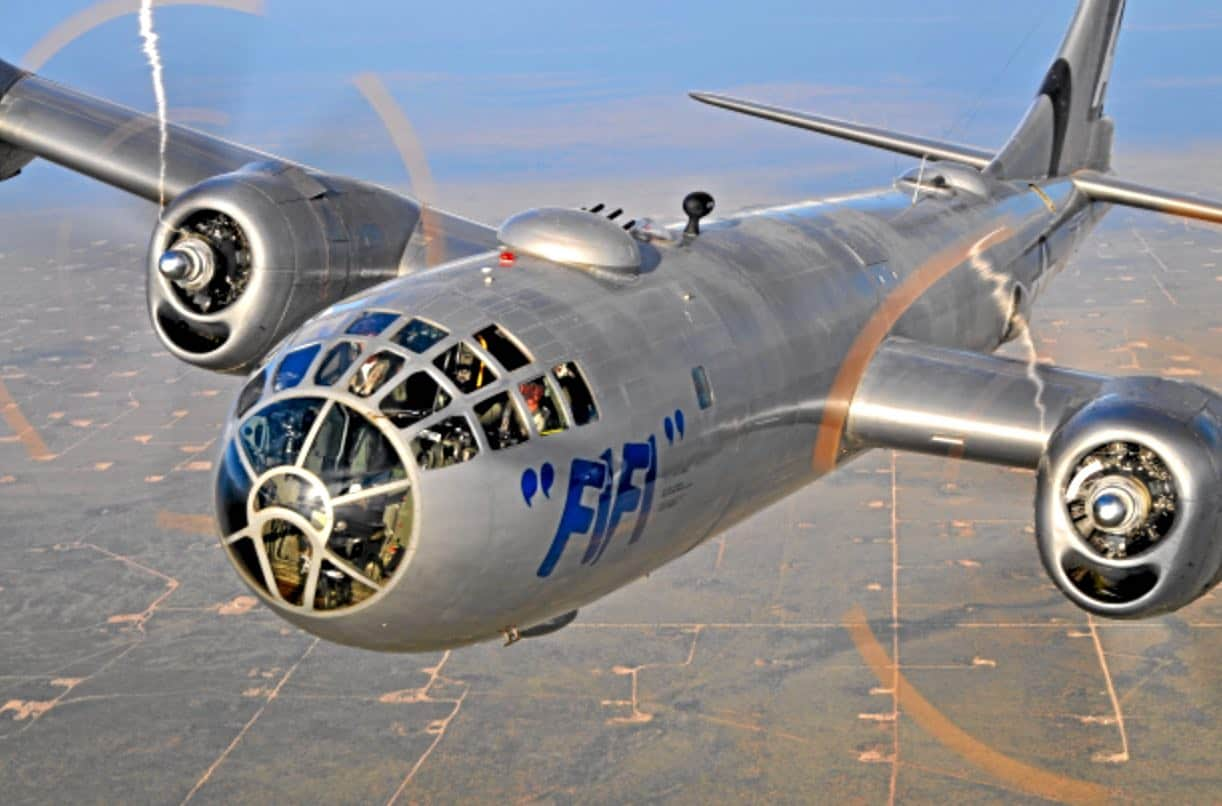
The B-29 Superfortress is a massive plane even by today’s standards. This bomber plane, designed by Boeing in the early 1940s, had several complicated advancements that improved the bomber plane. Among other things, it had pressurized crew cabins and remote-controlled armaments. It was also known as the heaviest production plane in the world! This was yet another significant aircraft during WWII. The B-29 was used for a variety of missions, including observation and in-flight refueling.
5. Northrop F-5 – U.S.A.
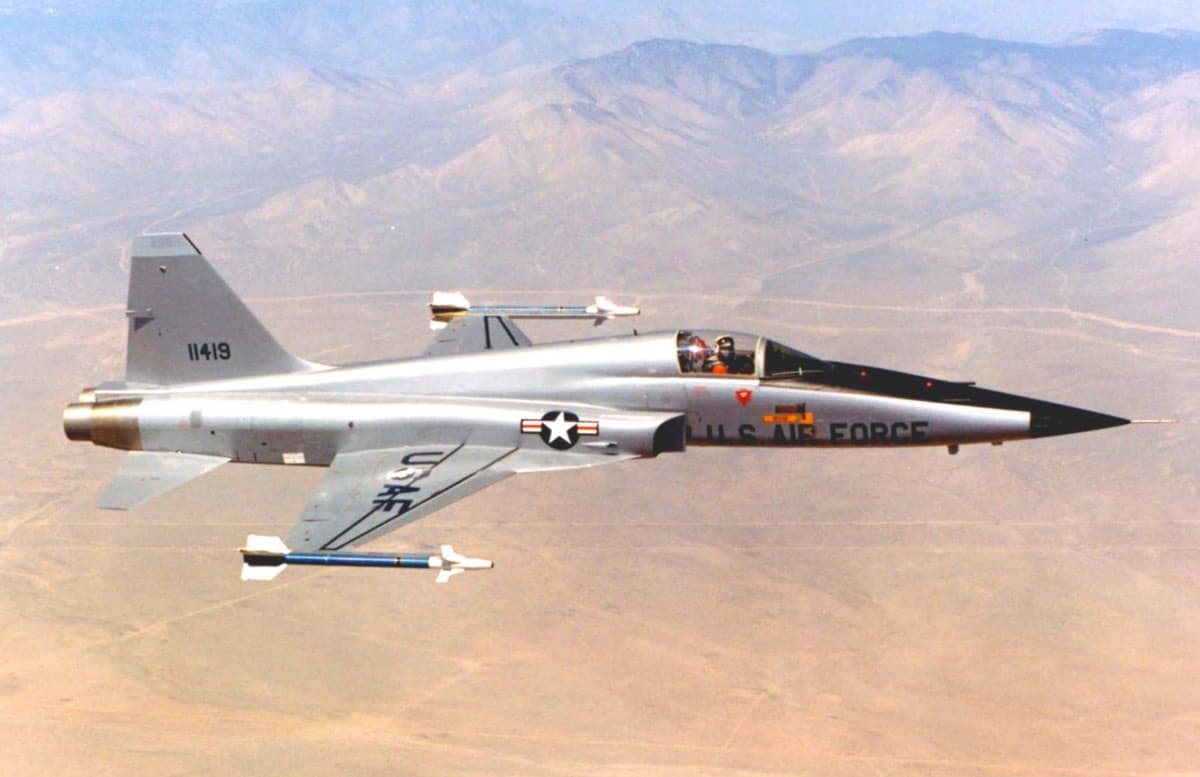
We have a few prototypes of a light supersonic jet fighter on hand. The Northrop F-5 is known for its simple, low-maintenance design, which allows it to fly and land quickly. In 1962, it was built for the first time. It was also widely exported and played an important part in the Allies’ military. It is still used as a training aircraft in the United States! This is a hypersonic fighter jet capable of reaching speeds of over 1,000 mph.
5. Bell UH-1 Iroquois – U.S.A.
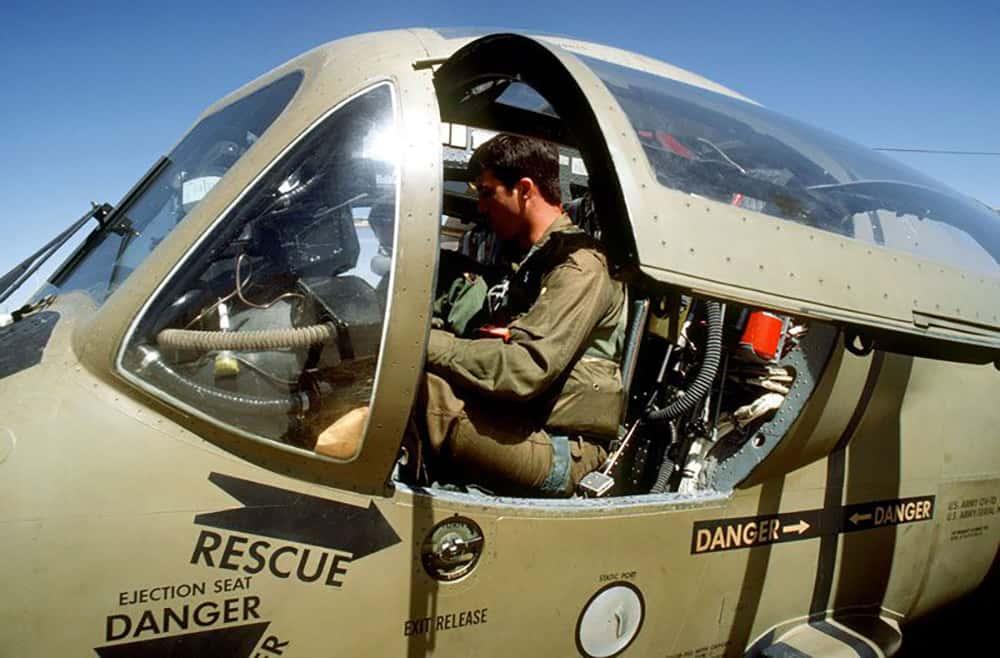
The Bell UH-1 Huey is a military helicopter that can be found in service all over the world. It is currently in use in over 40 countries. We don’t know about you, but we don’t think it diminishes the thrill! During the Vietnam War, it was utilized for the first time. It was historically used in a wide range of processes. Some of them were used for medical evacuations, transporting both workers and students. It has a top speed of 125 mph and can accommodate a crew of one to four people.
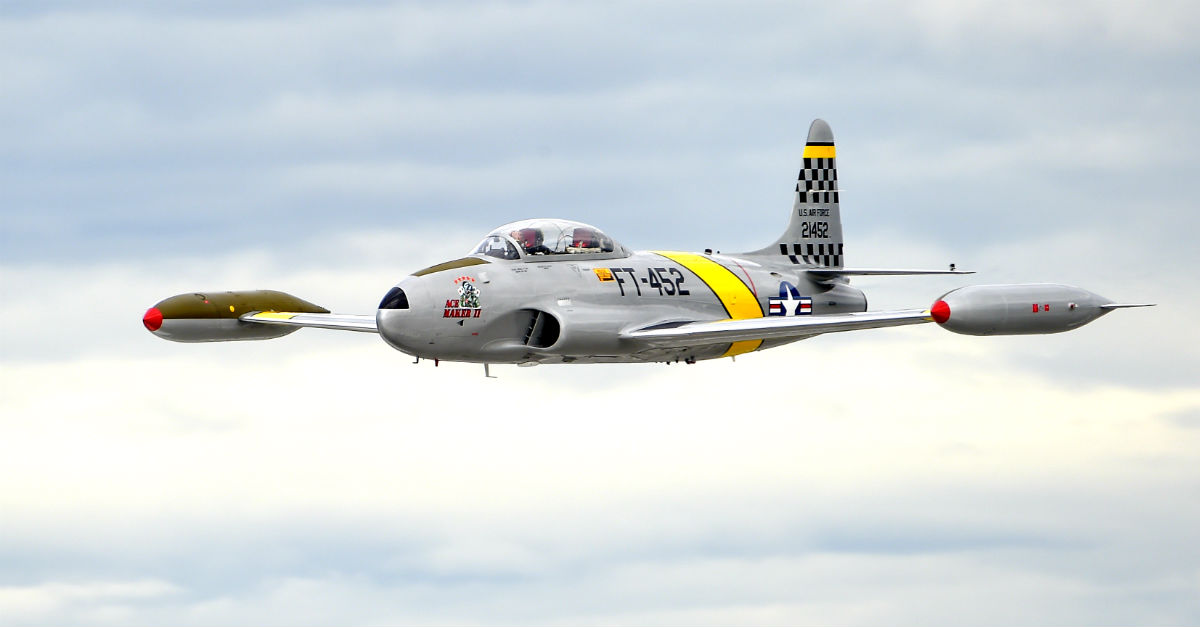
4. Lockheed T-33 T-Bird – U.S.A.
The Lockheed P-80 Shooting Star made several improvements to the US Air Forces. The new planes didn’t have propellers and flew differently than previous ones. The propeller-driven trainers failed miserably in their preparation for the P-8-s. Finally, the P-80’s fuselage was enlarged to allow for a second tandem seat. The Allison J33-A-35 turbojet for the T-33 Shooting Star was developed in this manner. It was the United States Air Forces’ first jet fighter training aircraft!